
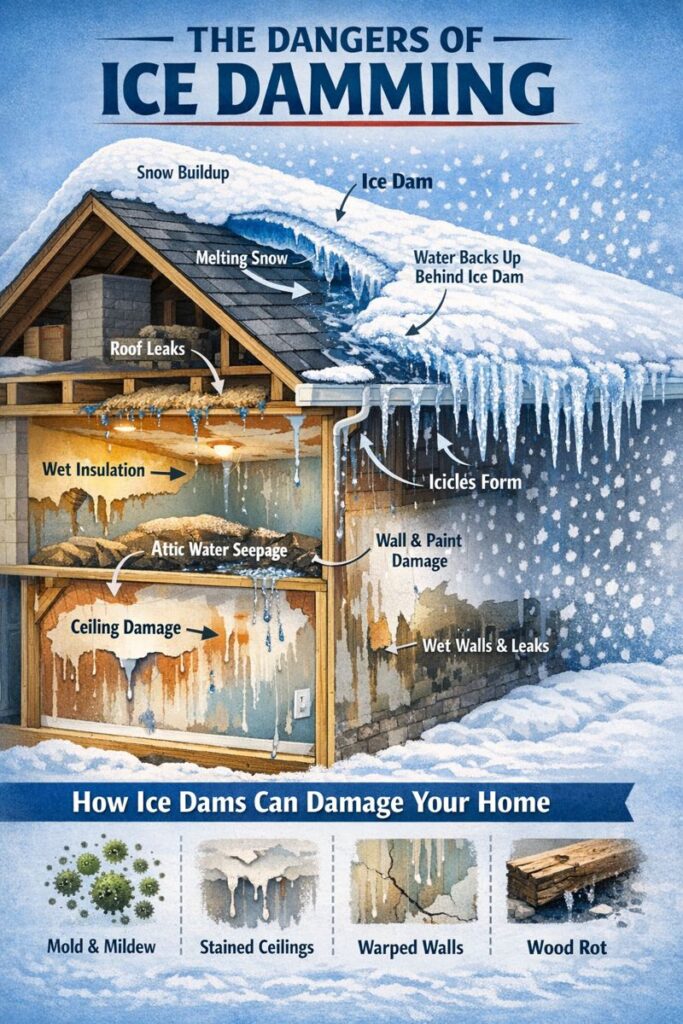
Ice damming damage can cause hidden leaks, mold, and structural issues inside your home. Learn how ice dams form, the warning signs, and how to prevent costly home repairs. While the thick ridge of ice along a roof edge may look harmless, the real danger is often what you can’t see: moisture infiltration and internal damage that can compromise your home’s structure, finishes, and indoor air quality.
An ice dam forms when heat escapes from the living space into the attic, warming the roof surface. Snow on the upper roof melts, flows downward, and refreezes at the colder eaves. Over time, this creates a dam of ice that prevents proper drainage. As melting continues, water backs up behind the ice dam and can be forced under shingles and other roofing materials—places never designed to hold standing water.
How Ice Dams Cause Internal Damage
Ice damming is especially dangerous because the most serious damage happens inside the building envelope.
Water Intrusion Into Walls and Ceilings
When water backs up under the roof covering, it can:
Soak roof decking and rafters
Leak into insulation
Travel down interior wall cavities
This often results in stained ceilings, bubbling paint, sagging drywall, and, in severe cases, ceiling collapse.
Insulation Degradation
Wet insulation loses much of its thermal resistance (R-value). Once compromised, it allows even more heat to escape, and accelerates ice dam formation, which can lead to increases heating costs. Fiberglass batts can mat down, while blown-in insulation can clump or shift, leaving cold spots throughout the home.
Mold and Indoor Air Quality Issues
Persistent moisture inside walls and ceilings creates an ideal environment for mold growth. This damage is often hidden until:
- Musty odors develop
- Occupants experience respiratory irritation
- Walls are opened during repairs
Mold remediation can significantly increase repair costs and health risks.
Structural Wood Rot
Repeated freeze–thaw cycles combined with moisture exposure can lead to:
- Rotting roof sheathing
- Deterioration of rafters and trusses
- Long-term structural weakening
Because this damage progresses slowly and out of sight, it may go unnoticed for years.
Electrical Hazards
Water migrating through ceilings and walls can reach:
- Light fixtures
- Junction boxes
- Wiring runs
This increases the risk of short circuits, corrosion, and in rare cases, electrical fires.
Warning Signs Inside the Home
Ice dams don’t always announce themselves loudly. Watch for:
- Brown or yellow ceiling stains
- Peeling paint or wallpaper
- Dripping water during thaw cycles
- Cold drafts near exterior walls
- Unexplained spikes in heating bills
Preventing Ice Dam Damage
The most effective solutions focus on controlling heat and moisture:
Improve attic insulation to reduce heat loss
Air-seal attic penetrations (lights, vents, hatches)
Ensure proper attic ventilation
Remove snow buildup safely after heavy storms
Install ice and water shield membranes during roof replacement
Temporary fixes like roof raking help, but they do not address the root cause.
Ice dam damage compounds over time. What starts as a small water stain can turn into thousands of dollars in repairs involving drywall, insulation, framing, and mold remediation.
Addressing ice damming early protects not just your roof, but the entire interior system of your home.
If you suspect ice dam-related damage, a professional inspection by a roofing contractor can help identify hidden moisture before it becomes a major structural or health issue. For any interior damage, call Restore It, your local, family-owned Certified Water Damage Restoration Company. 724-935-7511