Why it is important to review your homeowner’s policy?
If you own a home in Pittsburgh, you probably already know that water has a way of finding itself into places you’d rather it didn’t.
Maybe you’ve dealt with a wet basement after a heavy rainstorm. Maybe you’ve had a pipe freeze during one of those bitter Western Pennsylvania cold snaps. Or perhaps you’ve come home to find that a water heater, washing machine hose, or sump pump decided to fail at the worst possible time.
Water damage can happen to any homeowner—and when it does, things can get stressful fast.
One thing that can make a stressful situation even more frustrating is finding out that you aren’t covered for the type of water damage you’ve experienced.
That’s why it’s a good idea for Pittsburgh homeowners to review their homeowners insurance policy before they ever have to file a claim. Taking a little time now to understand your coverage could save you from some unpleasant surprises later.
As a local water damage restoration company, Restore It has seen firsthand how quickly a small water problem can turn into a major headache. While we’re not insurance professionals and can’t tell you what coverage you should purchase, we can point out some important things you may want to discuss with your insurance agent.
Water Damage in Pittsburgh: What Can Go Wrong?
Living in the Pittsburgh area comes with plenty of things we love—four distinct seasons, beautiful hills and neighborhoods, and, of course, weather that can change its mind pretty quickly.
Unfortunately, that weather can also create opportunities for water damage.
Heavy summer rain can overwhelm drainage systems. Winter temperatures can cause pipes to freeze and burst. Spring thaws can bring water into basements and crawl spaces. Older homes throughout the Pittsburgh region may also have aging plumbing, foundations, or drainage systems that require extra attention.
And then there are the everyday plumbing problems that can happen anywhere—a broken supply line, an overflowing toilet, a failed water heater, or a washing machine hose that suddenly gives out.
The bottom line? Water damage doesn’t always give you a warning.
Take a Look at Your Homeowners Insurance Before You Need It
When was the last time you actually read your homeowners insurance policy?
If your answer is “I can’t remember,” you’re definitely not alone.
Most people don’t spend their weekends reading insurance documents. But it’s worth taking some time to understand what your policy covers, what it doesn’t cover, and what your deductibles and coverage limits are.
It’s especially important to review your policy if you’ve recently:
Finished or remodeled your basement
Renovated your kitchen or bathroom
Added a home office
Purchased expensive furniture or electronics
Made major improvements to your home
Bought new appliances
Installed a sump pump or backup system
Changed insurance companies or policies
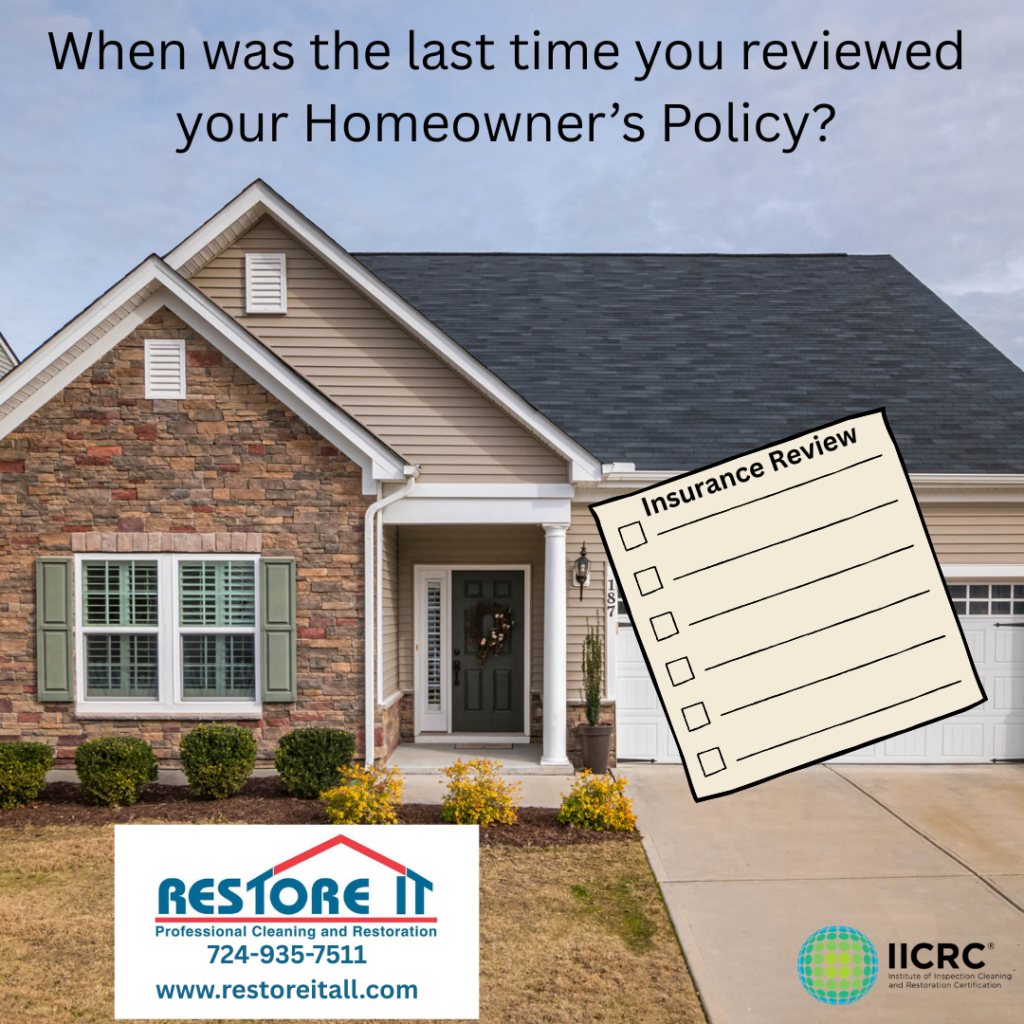
A quick conversation with your insurance agent can help you understand whether your current coverage still makes sense for your home and your situation. Remember to make an appointment to review your homeowner’s policy.
Coverage #1: Your Home Itself
One of the first things to understand is your dwelling coverage.
This generally relates to the physical structure of your home—things like walls, floors, ceilings, and other permanently attached parts of the house.
If a covered water loss damages your home, this coverage may help pay for eligible repairs. However, the cause of the water damage is important.
For example, a sudden pipe burst may be treated differently than a slow leak that has been happening behind a wall for months. Insurance policies can also have exclusions and specific requirements related to maintenance and neglect.
That’s why it’s important to ask your insurance agent, when you review your homeowner’s policy questions like:
What types of water damage are covered by my policy?
What types of water damage are excluded?
How does my deductible apply?
Are there any special limits I should know about?
The more you understand now, the fewer surprises you’ll have later.
Coverage #2: Your Belongings
Water doesn’t just damage drywall and flooring. It can also ruin the things you’ve spent years collecting.
Think about what’s in your basement alone.
Maybe you’ve got furniture, holiday decorations, family photos, tools, electronics, sports equipment, or your kids’ old toys stored downstairs. A significant water loss can damage a lot of personal property in a short amount of time.
Personal property coverage may help with eligible damage to your belongings, depending on the terms of your policy. Be sure to check coverage when you review your homowner’s policy.
It’s also worth finding out whether your policy pays based on actual cash value or replacement cost. Those terms can make a big difference in how damaged belongings are valued during a claim.
One of the best things you can do is create a simple home inventory. Take photos or videos of your belongings, especially expensive items, and keep receipts for major purchases when you can.
You don’t need to make it complicated. Even a quick walk-through of your home with your phone camera can be helpful.
Coverage #3: Sewer and Drain Backup
For many Pittsburgh homeowners—especially those with basements—sewer and drain backup coverage is something worth discussing with an insurance professional.
A sewer or drain backup can send contaminated water into your home, potentially damaging flooring, drywall, furniture, and personal belongings.
Depending on your policy, this type of damage may not be automatically covered. Some homeowners may need to add specific coverage or an endorsement.
Ask your insurance agent, when you review your homeowner’s policy whether your policy covers:
- Sewer backups
- Drain backups
- Sump pump failures
- Water damage caused by a backup
- Cleanup and remediation
- Finished basements and personal belongings
Also, ask about your coverage limits.
If you’ve invested a lot of money finishing your basement, you may want to make sure you understand exactly how your policy would respond if that space experienced a major water loss.
Coverage #4: Flood Insurance
Here’s an important distinction every homeowner should understand: water damage and flooding aren’t always treated the same way by insurance policies.
Many standard homeowners insurance policies don’t cover flood damage. Flood insurance is generally separate, so it’s important to talk with your insurance agent about your specific situation.
You might think, “I’m not near a river, so flooding isn’t something I need to worry about.”
But flooding can happen in more ways than people expect. Heavy rainfall, overwhelmed drainage systems, and rising water can all create serious problems.
The important thing is to understand how your insurance policy defines flooding and whether you have the coverage you need.
Don’t wait until water is coming through your basement door to find out.
Coverage #5: Additional Living Expenses
Imagine a major water loss leaves your home temporarily unlivable.
Maybe your kitchen is torn apart after a plumbing leak, or your basement and first floor need extensive drying and repairs. Depending on the circumstances, you may need to stay somewhere else while the work is being completed.
Some homeowners insurance policies include additional living expense coverage that may help with certain eligible costs associated with temporarily living elsewhere after a covered loss.
When you review your homeowner’s policy, ask your insurance agent:
Does my policy include additional living expense coverage?
What expenses are covered?
Are there limits?
How long does the coverage last?
It’s much easier to understand these details before an emergency happens.
Don’t Forget About Sump Pumps
If you have a Pittsburgh basement, there’s a good chance you’ve thought about your sump pump at least once.
Sump pumps can be an important part of keeping basements dry, especially during periods of heavy rain or groundwater issues. But like any mechanical system, they can fail.
A power outage, mechanical failure, or overwhelming amount of water can potentially leave your basement vulnerable.
Talk with your insurance agent about whether your policy provides coverage for water damage related to sump pump failure or backup. You may need additional coverage depending on your policy.
You may also want to consider practical preventative measures, such as having your sump pump inspected, maintaining it properly, and considering a battery backup system.
Pittsburgh Weather Can Be Tough on Your Home
If you’ve lived around Pittsburgh for a while, you know we can go from freezing temperatures to heavy rain and back again.
That constant change can put stress on your home’s plumbing and drainage systems.
During cold weather, make sure you know where your main water shutoff is located. If a pipe bursts, shutting off the water quickly can help limit the amount of damage.
It’s also a good idea to keep an eye on your basement, especially after heavy rain. If you notice water coming in, unusual moisture, or a sump pump that’s struggling to keep up, don’t ignore it.
Small problems can become much bigger problems if they’re left unaddressed.
Know Your Deductible Before You Have a Claim
Your deductible is another number you’ll want to know before an emergency happens.
If you have a water damage claim, your deductible may be your responsibility before your insurance coverage applies, depending on your policy and the circumstances of the loss.
Take a few minutes to find out:
What is my homeowners insurance deductible?
Are there different deductibles for certain types of claims?
How would my deductible apply to a water damage loss?
Knowing this information ahead of time can help you make better decisions if something goes wrong.
What Should You Do If Your Pittsburgh Home Has Water Damage?
If you wake up one morning to find water pouring from a broken pipe—or come home after a storm to discover a wet basement—the most important thing is to act quickly and safely.
If you can safely do so, stop the source of the water. Then:
1. Contact your insurance company or agent.
Let them know what happened and ask about the claims process.
2. Document the damage.
Take photos and videos of affected areas and belongings when it’s safe to do so.
3. Call a professional water damage restoration company. (Restore It 724-935-7511)
The sooner standing water is removed and affected areas are properly dried, the better the chance of limiting additional damage. Restore It is your locally owned, IICRC Certified water damage experts. We are here to help you restore your home to its pre-loss condition.
4. Keep your paperwork.
Save receipts, estimates, invoices, and records of your conversations with your insurance company and restoration professionals.
5. Follow the claims process.
Your insurance company can explain what documentation they need and what steps you should take next.
Don’t Wait Until There’s Water in the Basement
Nobody wants to think about water damage happening to their home. But a few minutes spent reviewing your homeowners insurance policy could make a big difference if the unexpected happens.
For Pittsburgh homeowners, it’s especially worth asking about coverage for sewer and drain backups, sump pump failures, flooding, personal belongings, and additional living expenses. If you’ve finished your basement or made major improvements to your home, make sure your insurance agent knows about those changes.
Most importantly, don’t assume that every type of water damage is automatically covered.
Read your policy. Ask questions. Know your deductible. Understand your exclusions.
Make a list of question of the items you want to make sure are covered when you review your homeowner’s policy.
And if water damage does happen, don’t wait to start the cleanup process. Water can continue causing damage long after the initial leak or flooding has stopped. Professional water damage restoration can help with water extraction, structural drying, moisture monitoring, and the steps needed to get your home back to normal.
In Butler, Beaver, and Northern Allegheny County, homeowners know that every home is a little different. Your insurance coverage should be just as personalized.
Take the time to review your homeowner’s policy today—because it’s much better to understand your coverage while your basement is dry than while you’re standing in a few inches of water.
Restore It has been servicing the Northern Pittsburgh area for over 45 years. While we work with your insurance company, it is you, the homeowner, that we work for. Restoring your home and providing outstanding customer service is what we have built our business and reputation on. Call Restore It for all of your water damage and mold remediation needs at 724-935-7511.