
Repairing the plumbing is only part of the process. Once the leak has been repaired, the surrounding area needs to be properly evaluated, dried, and treated for mold when appropriate. Having an experienced contractor like Restore It handle the drywall restoration can help ensure the damaged area is addressed correctly rather than simply covered up.
What Is a Pin Hole Leak?
A small water leak can create a surprisingly large problem. Pinhole leaks in copper plumbing lines are a good example. The opening may be tiny, but the water that escapes can soak drywall, insulation, flooring, and other building materials. If the leak is not discovered quickly, the affected area may develop staining, deterioration, or conditions that support mold growth.
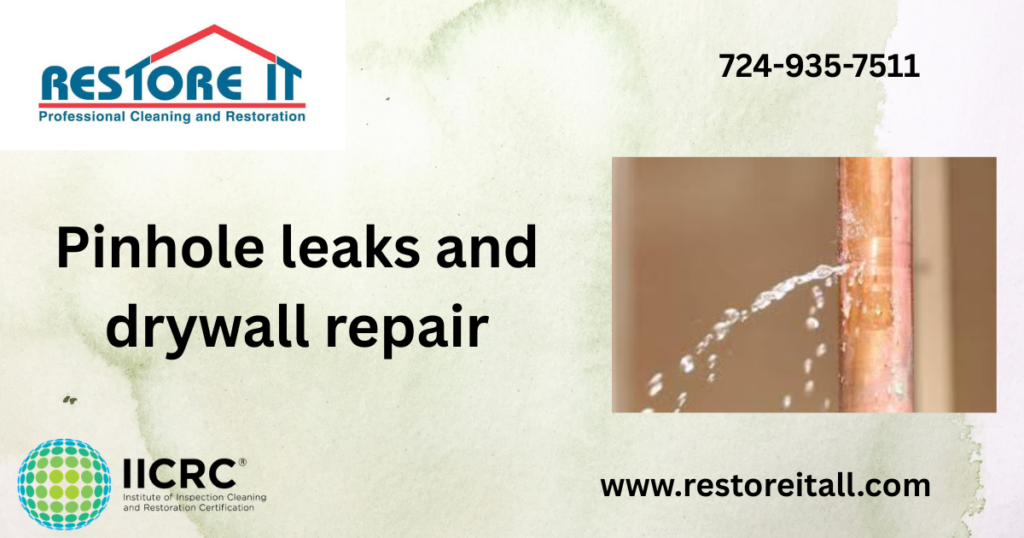
A pinhole leak is a very small opening that develops in a copper plumbing pipe. Despite its size, a pinhole can release enough water over time to cause significant damage.
These leaks can sometimes be difficult to find because they may occur inside walls, ceilings, or other concealed areas. Warning signs can include:
- Water stains on walls or ceilings
- Discolored or bubbling paint
- Soft or damaged drywall
- Musty odors
- Damp areas around plumbing
- Unexpected increases in water usage
- Repeatedly damaged areas near plumbing lines
If you notice signs of water damage, finding and correcting the source should be a priority.
Why Water Damage to Drywall Should Not Be Ignored
- Unfortunately, a pinhole leak can be an early warning sign that the copper plumbing is deteriorating. If one pinhole leak is discovered, it may be wise to consider replacing the remaining copper lines to help prevent additional leaks and costly water damage in the future. We suggest finding a qualified plumber to evaluate the copper lines in your home if you find a pine hold leak.
- Drywall is porous and can absorb water. When drywall remains damp, it can deteriorate and lose its structural integrity. Moisture can also affect insulation, framing, and other materials behind the wall.
Simply allowing the surface to dry on its own is not always enough. The extent of the moisture exposure should be evaluated to determine what materials can be safely dried and preserved and what materials need to be removed and replaced.
- The longer moisture remains present, the greater the opportunity for microbial growth. Microscopic mold spores need moisture, oxygen, and a food source to grow. Unfortunately, drywall, paper, wood, and dust are all viable food sources for mold. Mold growth can start in as little as 24 – 48 hours.
Evaluation and Restoration
When a copper line develops a pinhole leak, the area surrounding the plumbing should be evaluated for moisture damage. If water has entered the wall cavity, an experienced contractor, such as Restore It, with over 40 years of restoration experience, can help determine the extent of the affected materials.
Depending on the circumstances, proper restoration may involve:
Stopping the source of the leak. The plumbing problem needs to be corrected before restoration can be completed.
Evaluating the affected area. The wall, ceiling, insulation, and surrounding materials should be inspected for signs of moisture damage.
Removing damaged materials when necessary. Severely water-damaged drywall or other materials may need to be removed rather than covered.
Drying the area thoroughly. Proper drying helps reduce the moisture that can contribute to microbial growth.
Cleaning or treating affected surfaces appropriately. The appropriate method depends on the material, the extent of the moisture exposure, and whether visible microbial growth is present.
Replacing damaged drywall and insulation as appropriate.
Restoring and finishing the surface. The repaired area should be taped, finished, sanded, primed, and painted to blend with the existing wall.
When there is significant or suspected mold contamination, a professional mold remediation company such as Restore It or an independent mold inspector assessment may be appropriate rather than attempting to simply cover the affected area.
Why Experience Matters When Repairing the Drywall
Drywall repair after a plumbing leak is different from repairing a simple nail hole. The contractor has to consider both the visible damage and the condition of the materials underneath.
An experienced drywall contractor knows how to:
- Identify drywall that is too damaged to save
- Make clean, controlled cuts around damaged areas
- Protect surrounding surfaces during demolition and repair
- Properly fit replacement drywall
- Reinforce and tape seams
- Apply joint compound in multiple coats
- Feather repairs into the surrounding wall
- Match existing wall texture when necessary
- Properly prepare the surface for primer and paint
- Recognize when additional investigation may be needed
These details are important because a poorly finished repair can remain visible long after the original plumbing problem has been fixed.
Restore It has over 40 Years of Drywall Experience
Drywall repair is more than patching a hole—it’s about making the repair disappear. With over 40 years of experience, our techs understand the proper techniques for applying, blending, and matching a wide variety of drywall textures. That level of experience helps ensure your repair looks natural and blends seamlessly with the existing surface.
Don’t Let a Small Leak Become a Bigger Problem
A pinhole in a copper pipe may be tiny, but the resulting water damage can extend far beyond the pipe itself. Once the plumbing leak has been repaired, the affected wall should be evaluated carefully for moisture damage and possible microbial growth. Call Restore It at 724-935-7511 for a free in-home evaluation and estimate for any pinhole leaks and drywall repair or any water-damage-related issues.